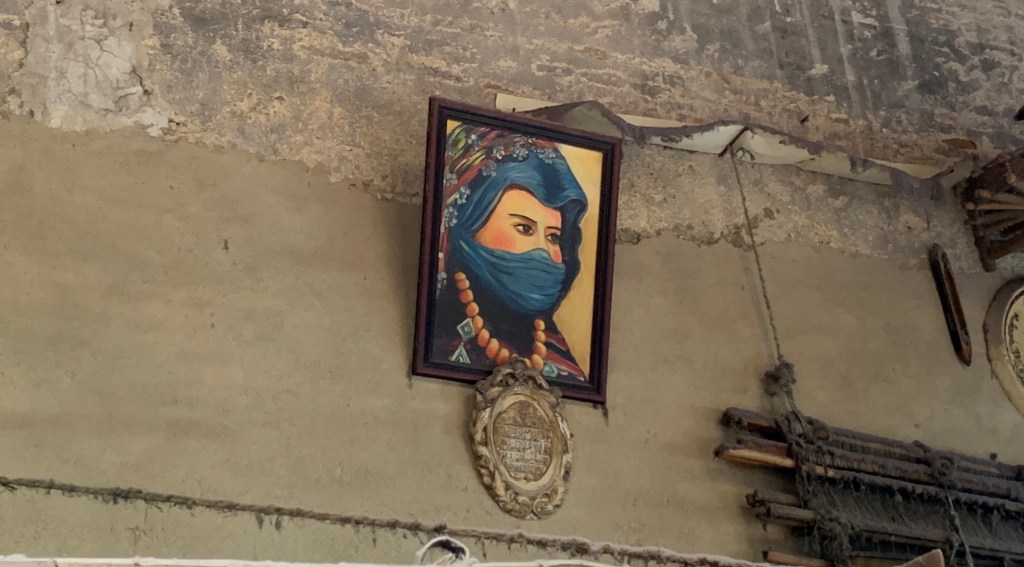
- Intro
- Thesis: “Allowable” public movement and presentation for Moroccan women are results of affluent and religious dependent dynamics between men and women, reinforced by age, class, and region
- How: observational because I can’t write a Moroccan woman’s experience
- Why: how women from different regions, age groups, and social classes interact amongst themselves and with those around them in a culture that supports the ideology that women do not belong in public spaces
- Spaces I am defining: Public and Private so I can later explain the “Man’s Domain”
- Lit Review
- Newcomb, Women of Fes
- “Culture and Etiquette in Morocco,” Rough Guides,
- Shampa Mazumdar and Sanjoy Mazumdar, “Rethinking Public and Private Space…”
- Safaa Kasraoui, “Women-Only Cafe Opens in Northern Morocco,”
- Leila Ahmed, Women and Gender in Islam
- Rachel Newcomb, “Gendering the City, Gendering the Nation…”
- https://www.aljazeera.net/news/women/2019/4/19/حملة-في-المغرب-ضد-الأمثال-الشعبية-المسيئة-للمرأة
- Samia Errazzouki, “Working-Class Women Revolt…”
- Saba Mahmood, Politics of Piety (hopefully)
- Rosa Rogers, Casablanca Calling.
- Public spaces and gender
- Before I get into cafes specifically I want to talk about the way I see women moving around in Rabat compared to other cities
- Most women in Chef I saw seemed like tourists and barely any in Fes.
- Use other cities and physical sources to support what I see in Rabat/ show proof on how there’s not one Morocco/ one Moroccan women
- I think this can help transition from the theory into cafe culture because from by observations so far the way a women moves and presents herself in cafes, if there are any at the time i’m there
- Before I get into cafes specifically I want to talk about the way I see women moving around in Rabat compared to other cities
- Cafes in Rabat
- Rabat is super progressive and very different from any other city. I also plan to spend more time around the Kasbah and Medina to see if/how dynamics change
- Cafes outside of Rabat
- Fes: there were barely any women in general aside from that one in the cafe
- Chefchaouen: many women I saw very clearly seemed like tourists except for henna women and like two store owners/workers
- Plan to include
- Casablanca
- Flower cafe in Tetouan
- Other cafes in Tetouan
- Tangier if we stop in a cafe?
- If we happen to stop/ notice any cafes during the desert trip
- I don’t know if I plan to travel after the desert trip or where I would like to go but tbd
- Cafes again
- Compare the different areas and cafes any why they feel different if they do.
- Gender, region, wealth, etc.
- Compare the different areas and cafes any why they feel different if they do.
- Night club
- Men got the weird looks for once because there were more women than men. A very interesting experience because it felt so safe and not intimidating at all.
- Hammam
- For a culture that cares so much about covering, I think the hammam offers a very unique perspective on how comfortable women can be with each other
- If I continue to not be able to talk to women I want to talk about that
- I want to include how much/ if any conversations because if I do not have any it can help show how women typically choose to keep to themselves in public
- Conclusion
- I think I want my conclusion to be how everything that affects public spaces and cafe culture for women all tie together. I believe so far that everything affects each other (women aren’t supposed to go to cafes/ take up space but even as it becomes more acceptable a room filled with men is intimidating even for me) but I need more time in cafes around Rabat and Morocco before I can make this claim and have it be valid.
 Where the sun sets